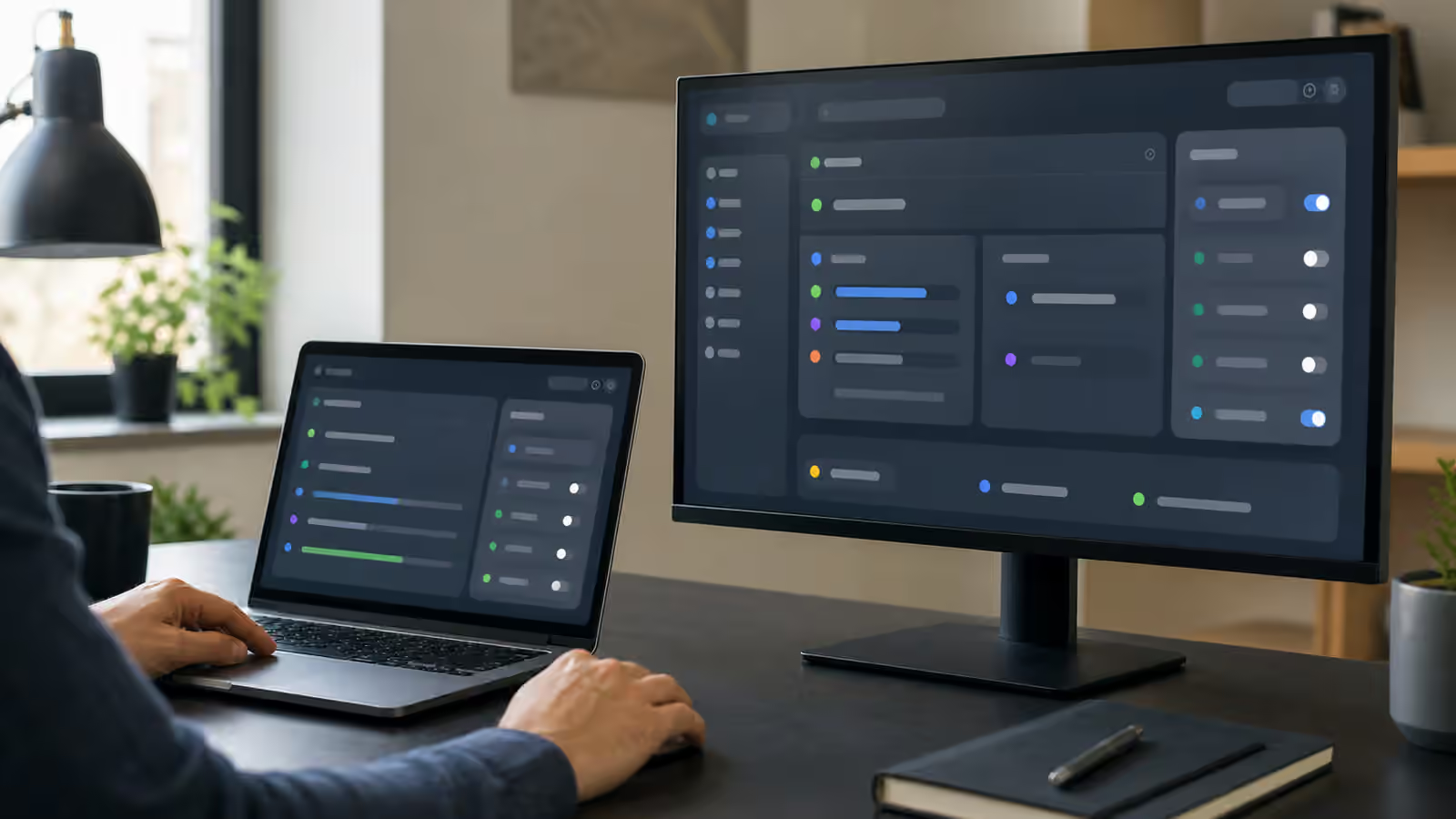
An AI agent can create a new kind of attention problem. It may report every step, ask for approval, announce tool progress, surface warnings, request clarification, mark blockers, and send final handoffs. Each notification may be reasonable alone. Together they can make delegation feel like managing a chatty process instead of getting work done.
Notification design is the operating discipline of deciding when an agent should interrupt, when it should batch, when it should leave quiet status, and when silence would be unsafe. It builds on AI Agent Status Updates , which explains how delegates should report progress. Notification design asks where those reports should land and how much attention they deserve.
The goal is not to make agents silent. A silent delegate can drift, stall, or act without enough review. The goal is to make signals carry weight. A person should learn that an interruption from the agent means a decision is needed, a risk has appeared, or work is ready for review. Everything else should be visible without constantly pulling the person back into the run.
Not Every Status Deserves An Interruption
Many agent events are informative but not interruptive. The agent started. It found sources. It is running tests. It is waiting for a tool. It created a draft. It is comparing records. These events may belong in a run trace, dashboard, or quiet status surface. They do not always belong in a person’s inbox, chat, phone, or alert stream.
AI Agent Observability gives the workflow a place to record what happened without demanding attention for every detail. Observability and notification should not be confused. The system should preserve evidence for review and debugging. It should interrupt people only when their attention changes the outcome.
This distinction keeps trust intact. If every ordinary step becomes a notification, people learn to ignore the agent. Then the important notification arrives in the same channel with the same weight and may be missed. Notification design protects urgent signals by keeping routine signals quiet.
Interrupt For Decisions, Risk, And Expiration
The strongest reason to interrupt is that the agent cannot safely continue without a human decision. It may need approval before a state-changing action, clarification about an ambiguous target, review of a sensitive draft, or a choice between two conflicting sources. In those cases, waiting quietly may waste time or lead to wrong assumptions.
Risk is another reason. If the agent discovers private data, a possible credential, a conflict outside its authority, a production impact, or a mismatch between the assignment and the available evidence, it should surface that promptly. The interruption should be specific and calm. It should say what changed, why attention is needed, and what safe options exist.
Expiration also matters. AI Agent Approval Scopes explains that approvals can go stale. A notification may be needed when an approval is about to expire, when a lease is stale, or when a queued action will no longer match the state that was reviewed. The alert is not noise if it prevents the system from acting under a boundary that no longer applies.
Batch Progress When The User Cannot Act Yet
If the user cannot act on the information, batching is usually better. A long-running research task does not need to announce every source. It can provide a compact mid-run checkpoint when a meaningful boundary appears. A coding agent does not need to send a message for every file it reads. It can report when it has reproduced the issue, prepared a patch, reached a test result, or encountered a blocker.
AI Agent Checkpoints offer natural batching points. A checkpoint is stronger than a stream of status snippets because it says what has been established and what remains open. The user can decide whether to redirect or let the agent continue. The notification carries state, not motion.
Batching also reduces emotional noise. Frequent partial updates can make the user feel responsible for supervising the agent even when no decision is needed. A good batch says enough to preserve confidence without turning the user into the workflow scheduler.
Channel Choice Changes Meaning
The same notification feels different depending on where it appears. A quiet dashboard card says the run is progressing. A chat mention asks for attention soon. An email may imply a record that can wait. A phone push may imply urgency. A ticket comment may be part of the official artifact. Notification design should choose the channel that matches the consequence.
This is especially important in AI Agent Review Queues . Review requests should arrive where reviewers already manage work, with enough context to decide. If urgent exceptions use the same channel as routine drafts, the queue becomes hard to triage. If routine drafts page people, the system will train them to disable alerts.
Channels also have privacy consequences. A sensitive agent finding may belong in a restricted review surface, not a broad team chat. A customer-specific draft may belong inside the ticket, not in an external notification with private details. AI Agent Data Boundaries apply to notifications too. A notification should reveal enough to route attention, not more private context than the channel deserves.
Notification Copy Should Be Operational
Agent notifications should avoid vague cheerfulness. “Done!” is not enough when the result needs review. “I found an issue” is not enough when the recipient needs to decide. Useful copy names the task, state, decision needed, and consequence. It can be short, but it should be operational.
For a draft, the notification might say that the response is ready for policy review and no message has been sent. For a code task, it might say that the patch is prepared, focused tests passed, and broader tests were not run. For a blocker, it might say that the target record is ambiguous and action is paused until the user picks the right one. The point is not to make notifications long. The point is to make them actionable.
This connects to AI Agent Output Verification . A final notification should not replace verification evidence. It should point to the artifact and summarize the verification state. If a person opens the notification and cannot tell whether they are being asked to approve, review, wait, or intervene, the notification has failed.
Quiet Signals Need A Place To Live
Reducing interruptions works only if quiet signals are still available. A user should be able to see that a run is active, paused, waiting on a tool, waiting on review, completed, failed, or expired. If quiet status is invisible, users will ask for more interruptions because they have no other way to know what is happening.
AI Agent Control Surfaces are the natural home for quiet signals. A control surface can show current state, owner, last checkpoint, pending approval, elapsed time, and next expected step. The user can inspect when they care without being pulled in when they do not.
Quiet signals also help teams. A manager can see queue health without reading every run. A reviewer can see which artifacts await attention. An operator can see stuck work before it becomes an incident. The key is that the signal is available at the right layer, not sprayed through every channel.
Notification Habits Should Be Measured
Notification design should improve over time. If people ignore most agent messages, the threshold is too low or the copy is weak. If agents often stall because people miss requests, the channel or urgency model is wrong. If users keep asking for status manually, quiet surfaces may be insufficient. If review queues overflow, final handoff notifications may be too late or too broad.
AI Agent Operating Metrics can include attention metrics without becoming surveillance. The workflow can track unresolved approval requests, time to review, repeated clarification prompts, muted channels, stale runs, and reopened artifacts. These signals show whether notifications are helping work move or merely creating noise.
The mature agent system treats attention as a scarce resource. It does not interrupt to prove that work is happening. It interrupts when attention is needed. It batches when progress can wait. It records quiet status where people can inspect it. It routes sensitive signals through appropriate channels. It writes notifications as operational handoffs, not as little performances.
That discipline makes delegation feel calmer. The agent is visible without being noisy, assertive without being pushy, and quiet without being opaque. People can trust the signals because the signals have been designed to mean something.